
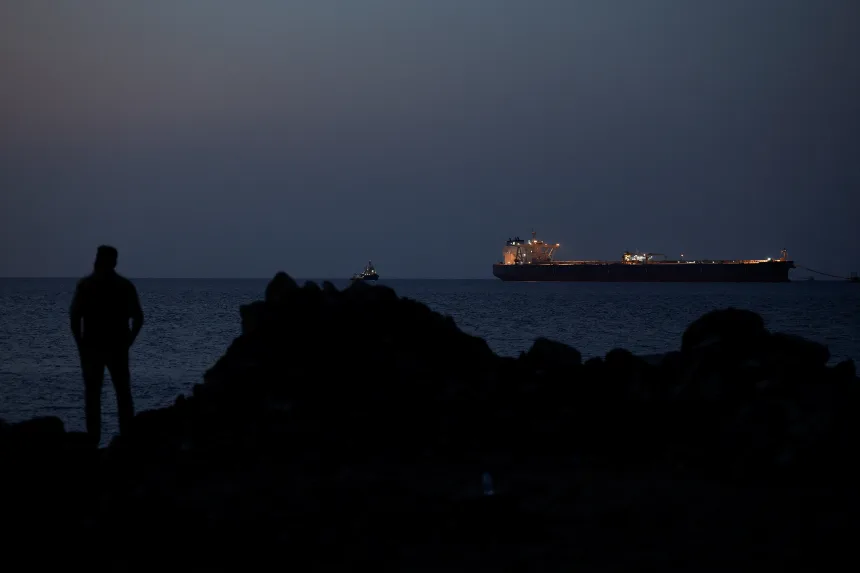
A president threatened to bomb Iran’s power plants — plunging the world toward recession and war. But when the moment of truth arrived, he paused. And nobody knows if the pause is strategy… or surrender.
The Weight of a Pause
The phone call came at 3:47 in the morning, Washington time.
General Marcus Webb had been in the Situation Room for six hours straight, watching the feeds from the Persian Gulf with the kind of exhausted intensity that comes only after days without real sleep. The satellite imagery was updating every ninety seconds. The USS Bataan — an amphibious assault ship carrying the better part of a Marine Expeditionary Unit — sat in the northern Gulf, bristling with capability but still technically outside strike range of Kharg Island. The second MEU, the one that had sailed from San Diego only days before, was still four hundred miles out.
Four hundred miles.
It might as well have been four thousand.
“Sir,” the duty officer said quietly, “the President is asking for options.”
Webb turned away from the screen. In the glass reflection, he could see the lines of his own face — the tight jaw, the shadows under his eyes, the careful blankness that career officers learn early and never entirely lose. Options. The President was always asking for options. What the President rarely wanted was to hear how bad all of them were.
He picked up the receiver.
On the other side of the world, in a basement bunker somewhere beneath the administrative ruins of what had once been a functioning government ministry, a woman named Shirin Hosseini was writing in a notebook by flashlight. She was not a soldier or a general or a politician. She was an engineer — had been, until three weeks ago, a very good one, employed by the National Iranian Oil Company in a mid-level technical role that had given her access to sensitive infrastructure documents without, she had always assumed, making her a target of anyone in particular.
The assumption had proven incorrect.
She wrote quickly, in the cramped, slanted script of someone used to taking notes on the move. What she was writing was not a report, not a memo, not anything that could be called official. It was a letter to her daughter, who was twelve years old and currently staying with Shirin’s sister in a suburb of Mashhad, far from the worst of the bombardment. Whether the letter would ever reach her daughter was something Shirin had stopped trying to calculate. You wrote the letters anyway. You kept the thread.
Dear Niloofar,
I want to explain some things to you, when you are old enough to understand them. Not to excuse, and not to blame anyone in particular. Just to explain. Because when this is over — and it will be over, eventually — people will argue about what happened and why, and the arguments will be very loud and very confident, and most of them will be wrong.
I want you to know what it felt like from the inside.
She paused, listening to a sound in the distance. Not an explosion — something lower, more mechanical, the groan of a building settling. Or maybe a truck on the ruined street above. It was increasingly difficult to tell.
What it felt like, she continued, was confusion. Not fear, exactly — fear comes in moments, sharp and clean. This was something slower. A kind of bewilderment. How did we get here? That was the question I kept asking. Not as a political question. As a personal one. I woke up one morning and the Strait was closed and the Americans were bombing and everyone I knew was terrified, and I kept thinking: six months ago I was arguing with a supplier about delivery timelines for industrial pumps. How does a person get from there to here?
She stopped writing. Above her, the building shuddered. She counted silently to twenty. Then continued.
The answer, I think, is slowly and then all at once. A series of decisions made by people far away from us, people who were managing their own crises, their own political pressures, their own fears — and none of them could see very far ahead. They each moved one step. And then the next step was taken by someone else. And then someone else. And then one day you look up and you are in a war that no one, if they’re honest, fully intended.
The President of the United States was watching cable news.
This was not, strictly speaking, unusual. What was unusual was that he was doing it in silence — no commentary, no running narration to the staffers hovering at the edges of the room, no instinctive recalibration of whatever the anchor was saying into something more flattering. He was just watching.
On screen, a scrolling chyron: IRAN CLOSES STRAIT SECOND CONSECUTIVE WEEK — OIL FUTURES UP 23% — WHITE HOUSE SIGNALS NEW TALKS POSSIBLE
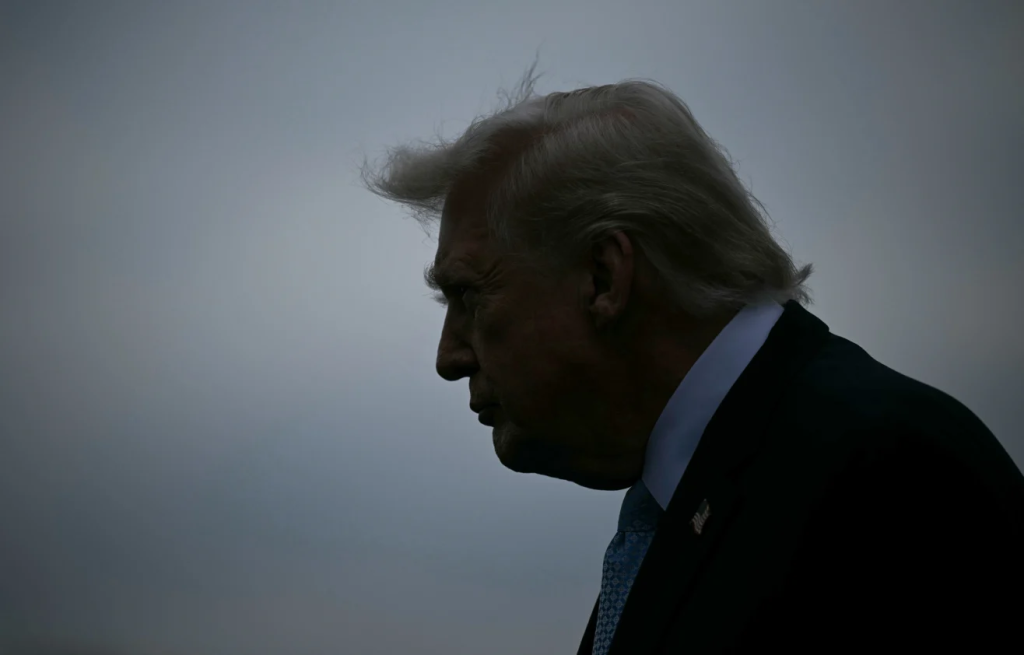
The anchor, a trim woman in a red blazer whose studied neutrality was clearly costing her some effort, was describing what she called “a period of diplomatic uncertainty unprecedented in recent memory.” The phrase made the President’s jaw tighten slightly. Uncertainty. He hated that word. Uncertainty was what happened to other people. He moved fast. He kept them guessing. That wasn’t uncertainty — that was leverage.
And yet.
The Dow had dropped another four hundred points at open. Oil had touched ninety-six dollars a barrel. His chief of staff had placed a printed summary of three separate polling snapshots on the corner of the desk: all three showed his approval rating at thirty-eight percent, the lowest of his presidency, with independent voters breaking sharply against continued military action. In the Senate, two members of his own party had issued statements using the phrase “proportional response” — code, in the current environment, for we think you’ve gone too far.
He picked up his phone. Put it down. Picked it up again.
The question — the one he kept circling without quite landing on — was not whether he could escalate. He could escalate. The military assets were moving into position; within seventy-two hours, depending on weather and resupply logistics, the MEU out of San Diego would be close enough to make a ground operation at least theoretically possible. He could bomb the power plants. He’d threatened to bomb the power plants. The threat was out there, part of the record now, and everyone was watching to see if he’d follow through.
The question was what happened after.
He’d asked the generals, early on. They’d given him the professional answer: a matrix of scenarios, probability-weighted outcomes, supply chain assessments. He’d listened to approximately twelve minutes of it before the language started making him feel like the walls were closing in. Probability-weighted. Assessment. Matrix. He wanted someone to tell him what was going to happen, and they kept telling him what might happen, in seventeen different ways, with confidence intervals.
What he knew, with the directional certainty that had always served him in business and in politics, was this: the option that looked like strength was not the same as the option that was strong. He had been confusing the two, recently. He suspected everyone around him had been confusing them too, and that no one wanted to be the one to say so.
He picked up the phone and called his national security advisor.
“I want to talk about the pause,” he said.
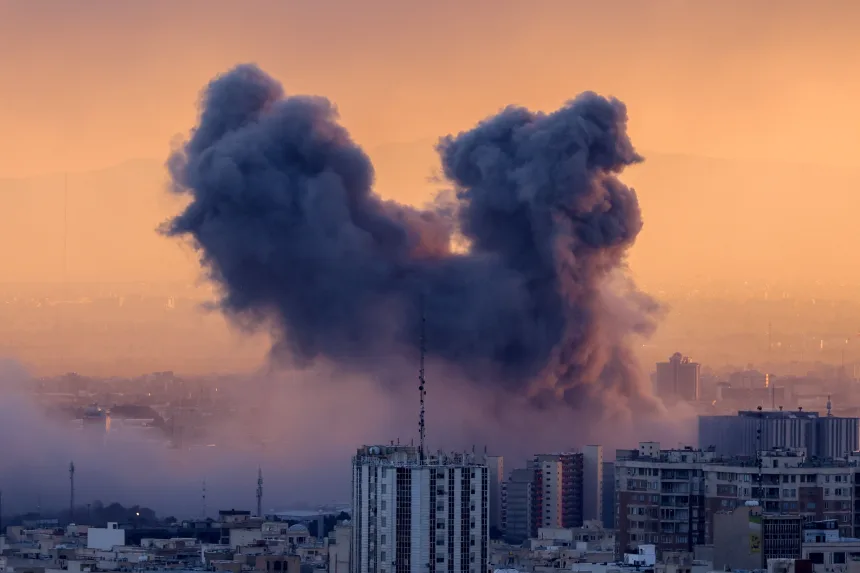
In the operations room of the Islamic Revolutionary Guard Corps — the location of which had been moved three times in the past two weeks following the strike that had killed two of the regime’s most senior commanders — a colonel named Farrukh Sadeghi was presenting an analysis to the remaining senior leadership of the IRGC navy.
The analysis was methodical. Even, in its way, admirable. It laid out, with the cold efficiency of an institutional culture that had survived forty years of sanctions, coups, and proxy wars, exactly where the pressure points lay in the American position.
The Strait. That was the lever. That was the only thing that mattered.
As long as the Strait remained closed — or even threatened, even functionally disrupted — every cargo ship captain in the Gulf made a calculation before sailing. Insurance companies revised their rates. Buyers in Asia and Europe started looking at alternate suppliers. And every additional hour that oil stayed above ninety dollars a barrel was an hour of political pain in Washington, in Riyadh, in the European capitals. The Americans were not suffering militarily. They were suffering economically and politically, which was, in many ways, a more durable kind of suffering.
The colonel had a graph. He put it on the screen.
“Their options,” he said quietly, in Farsi, to the half-dozen men seated around the scarred conference table, “narrow with time. Not ours.”
One of the men — a general whose name had been on Western intelligence lists for fifteen years, whose photograph the Associated Press had released after the last round of sanctions — leaned forward. “And if they strike the power grid?”
The colonel considered. “Then we do what we promised. And their Gulf partners lose infrastructure they spent thirty years building. And the question becomes whether they are willing to spend another thirty years rebuilding it in exchange for having eliminated ours.” He paused. “We do not believe they are.”
The general nodded slowly. Not with satisfaction, exactly. With recognition.
“Then we wait,” he said.
The word TACO had first appeared in a financial analyst’s newsletter six months earlier, used to describe what the analyst called the president’s “instinctive reluctance to follow through on economic threats that carry genuine market consequences.” The acronym — Trump Always Chickens Out — had the kind of rhetorical concision that travels well, and it had traveled: from finance newsletters to political commentary to, inevitably, late-night television, where it acquired a second life as punchline.
The president had seen it. He had, according to three people familiar with his reaction, found it less funny than his public dismissal suggested.
There are moments in any presidency — maybe in any human life — when the gap between the story you’ve been telling about yourself and the reality you’re actually living becomes too narrow to ignore. The president had spent a political career trading on a reputation for unpredictability, for willingness to push further than anyone expected, for a tolerance of chaos that others lacked. The reputation was not entirely false. He had pushed further. He had accepted chaos. He had done things that the conventional wisdom said couldn’t be done or shouldn’t be tried.
But now the conventional wisdom had refined its critique. It wasn’t saying he was predictable. It was saying he was predictable in a specific way — that when the consequences of a threat became real, when the tariff actually hit and the markets actually moved and the trading partners actually retaliated, some version of a phone call would happen, some version of a negotiating window would open, and some version of walking back from the brink would occur. Not because of cowardice, exactly. Because of an instinct, deep and apparently unkillable, for survival.
The question the analysts were asking now — the one that had filtered up from financial newsletters to intelligence briefings to the conversations being had in Allied capitals — was whether that instinct could operate in a situation where the consequences couldn’t be absorbed the way market consequences could be. Where you couldn’t just reopen the negotiations and call it a win.
Wars, unlike tariffs, had a logic of their own.
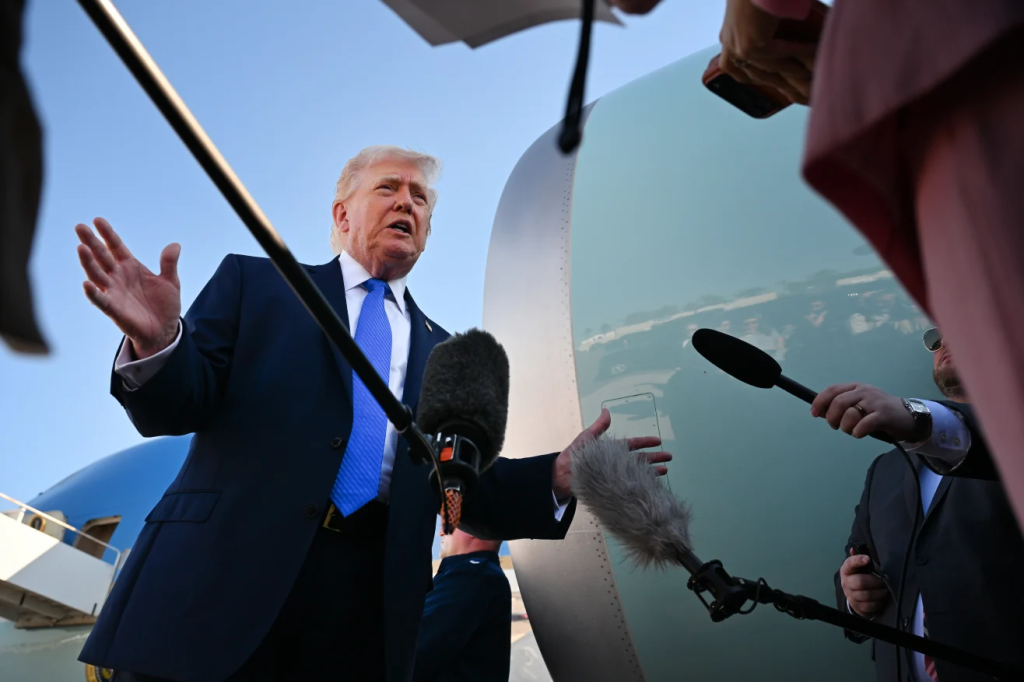
Lieutenant Commander Sarah Okafor had been stationed on the USS Bataan for eight months. She had a husband and two kids in Norfolk. She had a box under her bunk containing approximately sixty letters she hadn’t sent yet — one for each week of deployment, addressed to her older daughter, cataloguing in careful detail the things she was missing: the first day of school, a dance recital, a birthday, a loose tooth.
She stood at the rail on the morning of the fourteenth day of active operations and watched the sun come up over the Gulf.
The water was a color she had no word for — not blue exactly, not gray, something between the two that shifted as the light changed. She had been in the Navy for twelve years and still, sometimes, the sheer physical fact of the ocean startled her. The scale of it. The indifference. Whatever was happening in Washington, whatever calculations were being made in the Situation Room or the IRGC bunker or the trading floors in New York, out here the water was just the water and the sky was just the sky and the sun was rising the way it always rose.
She thought about her kids. She thought about the letter she hadn’t finished. She thought about the briefing from the previous morning, which she was not supposed to discuss with anyone at her security level, but which had made her stomach feel like a stone.
The word imminent had appeared several times.
She turned from the rail and went back below.
In Geneva, in a hotel conference room with beige carpet and inadequate ventilation, a Pakistani diplomat named Khalid Mirza was speaking quietly on the phone to a contact in Tehran. His English was precise, his face professionally neutral, his voice carrying the particular register of a man who has spent a career threading needles in the dark.
He had been doing this — the back-channel work, the indirect conversations, the careful parsing of statements that could mean three different things depending on how you read the emphasis — for seventeen years. He was very good at it. He was, in the current context, perhaps the only person in the world who had simultaneously active relationships with people who trusted him in both capitals.
“The Americans,” his contact said carefully, in Farsi, “have said fifteen points of agreement.”
Mirza closed his eyes. “I know what they said.”
“There was no meeting.”
“I know.”
A long pause.
“Is there someone on their side,” the contact said, “who actually wants to talk? Or is this—” He trailed off. There was a word in Farsi that didn’t translate well — something like posturing, but more specific, more contemptuous. The word for a statement made to be seen rather than believed.
Mirza thought for a long moment.
“There are people on their side who want to not continue this,” he said finally. “Whether that’s the same thing as wanting to talk — that I cannot tell you yet.”
Another long pause.
“Come to Islamabad,” his contact said.
The economists had their own language for what was happening.
Stagflationary shock. Demand destruction. Supply disruption. Sovereign risk premium. These were not empty terms — each one pointed at something real, at some measurable consequence flowing from the closed Strait and the spiking oil price and the calculation being made daily in board rooms and central banks and planning ministries around the world. The consequence was this: the global economy had not collapsed, but it had started to make a sound, a low structural groan that people who’d heard it before recognized and people who hadn’t were learning to fear.
The Federal Reserve had held an emergency session. The European Central Bank had held an emergency session. The Bank of Japan had held an emergency session. The communiqués issuing from these sessions all used reassuring language — monitoring developments closely, prepared to act, tools remain available — which was, in financial parlance, the equivalent of a doctor telling a patient to remain calm. It meant: we are worried.
A retired central bank governor, asked on a radio program what the real risk was, had said something that lodged itself in the public consciousness: “The risk is not a crash. The risk is a slow puncture. Markets can survive a crash — they know how to process one. What they cannot easily survive is sustained, unresolvable uncertainty. If no one can project, six months out, what oil will cost or what Gulf shipping lanes will look like or what relationship the United States will have with its regional partners — you don’t get a crash. You get a freeze. And a freeze, in a global economy with the leverage ratios we have, is in some ways worse.”
Nobody particularly wanted to think about what worse meant.
On the seventeenth day of the war, the President of the United States sent a message — not a formal diplomatic cable, not an official statement, but a message — via a channel that two of his closest advisors and a senior Treasury official were only partially aware of, to an individual in a neutral capital who had, in a previous phase of the negotiations, served as an informal conduit.
The message was short. It said, in effect: we are prepared to discuss.
The response came back in four hours. It said: who is we?
It was, in its way, the most important question of the conflict.
Because the answer — the honest answer — was complicated. The administration was not a monolith. It never had been, under this president. There were people in the cabinet who believed the war had to be won outright, that any negotiated settlement would be read in Tehran and in every other hostile capital as confirmation that applying sufficient pressure to the American economy was an effective strategy for limiting American military action. That couldn’t be allowed to stand. You had to finish it.
There were other people — fewer, quieter — who believed the war had already accomplished more than was strategically necessary, that the degradation of Iran’s military capacity had shifted the regional balance of power, and that the cost of pressing further — in economic damage, in allied relations, in the second-order political consequences of what was beginning to look like an unending conflict — was now exceeding the benefit. You had to get out.
And then there was the president himself, who moved between these positions with a fluidity that those around him had learned to read, not as incoherence exactly, but as responsiveness — to markets, to polls, to the pressure of events, to the instinct he’d always had for the position that kept him viable one more day.
Who is we?
The honest answer was: we are still figuring that out.
The morning briefing at the White House on the eighteenth day included a document that very few people saw — a three-page intelligence assessment, produced jointly by the CIA and DIA, on the current leadership structure of the Islamic Revolutionary Guard Corps following the strikes of the past two weeks.
The assessment’s core finding was uncomfortable: the strikes had not produced a more moderate IRGC. They had produced a more radicalized one. The senior commanders who had died in the first ten days of the war had been, by the standards of the institution, pragmatists — men who understood leverage and limits, who had always kept one eye on the long game. The commanders who had emerged from the chaos were harder, more ideological, more willing to absorb punishment in pursuit of what the document called “maximalist objectives.”
The implication for negotiations was grim. If the administration was hoping to find, on the Iranian side, interlocutors willing to trade the Strait for concrete security guarantees, the likeliest available interlocutors were men who had spent the last two weeks watching their colleagues die in American airstrikes and who were not, at this particular moment, in a mood for concession.
The briefer finished. The President looked at the ceiling for a long moment.
“So they’re angrier,” he said.
“That’s one characterization, sir.”
“And we need them to stop being angry enough to open the Strait.”
“Among other objectives, sir, yes.”
“And bombing them more will make them—”
“Assessments vary, sir.”
The President nodded slowly. This was the part of the job that no one in the business world had prepared him for — not the complexity exactly, not even the stakes, but the peculiar texture of decisions where every option came with a cost you couldn’t calculate in advance and a consequence you couldn’t undo.
In business, you could restructure the debt. You could exit the market. You could take the asset through bankruptcy and buy it back at a discount. There was always, eventually, a mechanism. A legal process. A financial instrument.
In wars, the mechanism was just more war.
Shirin Hosseini finished her letter to her daughter on the twentieth day. It was eleven pages long by then, written in three different notebooks as she’d moved locations. Some of it was about the war. Some of it was about her daughter’s childhood — things she’d observed and stored up, small moments she was afraid she’d forget if she didn’t write them down. The time Niloofar, age six, had very seriously explained to a houseguest that rain was made of “sky tears,” and had gotten angry when the guest laughed. The way she organized her school bag with a precision bordering on anxiety, everything in exactly the right pocket.
Shirin didn’t know if she believed in God. She’d been raised to believe, had practiced for years, had lost the practice somewhere in her thirties without ever making a conscious decision about it. But writing to her daughter by flashlight in a city that was holding its breath, she found herself doing something that felt, if not like prayer, then like the structural cousin of prayer: making an argument to the universe, or to whatever was listening, that this specific twelve-year-old girl in Mashhad had earned more time with her mother.
She sealed the letter in an envelope. Wrote her sister’s address on the front. Tucked it into the inside pocket of her jacket, where she would carry it until she found a way to send it.
Then she went back to work, because the pumps in the facility she was helping to keep operational were not going to maintain themselves.
The pause lasted five days.
On the morning of the sixth day, markets opened with a cautious optimism that analysts were careful to describe as fragile. The Dow rose. Oil dropped eleven percent. Brent crude, the global benchmark, fell faster than it had risen, as if the market had been waiting for an excuse to stop panicking and had finally found one in the shape of an American official’s comment about “productive preliminary discussions.”
Tehran said there had been no discussions. Washington said there had. The Pakistani diplomat in Geneva said nothing publicly. In Islamabad, a room was being prepared.
The President of the United States posted on social media: Iran wants to make a DEAL. I have always said they would come to their senses. Big week ahead! America wins again.
His approval rating ticked up two points. Oil stayed down. The second MEU, still at sea, received orders to hold position pending further guidance.
In the bunker, the IRGC colonel looked at his graphs and said nothing.
On the USS Bataan, Lieutenant Commander Okafor wrote another letter she didn’t send, this one to both daughters, describing the color of the Gulf at sunrise.
In a ruined street in a city she had loved her whole life, Shirin Hosseini found a truck driver willing to take passengers north. She paid him what she had. She put her daughter’s letter in his hands and told him the address and watched his face while he decided whether to promise her anything.
He didn’t promise anything. But he took the letter.
She climbed into the truck.
General Webb, back in Washington, sat in his office at 4 AM and thought about the word imminent, which he had used in a briefing eight days ago and which had proven, like most of the certainties of the past three weeks, to be more conditional than he’d intended.
He thought about the MEU four hundred miles short. He thought about the power plants that had not been bombed. He thought about the Strait, which was still technically closed, or mostly closed, or threatening to open depending on which intelligence feed you believed. He thought about the fourteen years he’d spent in uniform before anyone had made him a general, and the young officer he’d been then, who had believed — genuinely believed — that the point of military power was deterrence. That if you were strong enough, and credible enough, you didn’t have to use it.
He was no longer certain he believed that. He was no longer certain he believed a lot of things he’d believed then.
But he still believed in the specific, limited, demanding obligation he had to the men and women on the ships and the forward bases and the airfields, who were waiting for clarity that was not coming, who were prepared to do what was asked of them and who deserved, at the very minimum, to have the asking be the result of thought.
He picked up a pen. Started drafting a memo he would probably never send, describing what winning in the current situation might actually require and what it would actually cost and what, in the realistic best-case scenario, the region would look like on the other side of it.
He wrote for two hours. The memo ran to thirty-one pages.
He put it in his desk drawer.
He went to the window and looked out at the pre-dawn sky over Washington — gray and still, the monuments dark, the city just beginning its morning mechanics — and thought about his own daughter, who was twenty-three and working at a nonprofit in Baltimore and who called him every Sunday, without fail, and asked him how he was doing.
He would call her Sunday. He would tell her he was fine.
He would not be lying, exactly. He would be doing something more complex: maintaining the version of himself that she needed him to be, holding it in place against the weight of what he actually knew, which was that no one in any position of authority had a clear view of how this ended, and that the next decision — the pause extended or the pause broken, the talks opened or the escalation resumed — would be made by a man in a tower watching cable news, and that the man was doing his best with what he had, and that his best might not be enough, and that even this — even the possibility of not enough — was something the country did not have a framework for, not really, not yet.
The sky lightened.
He went to get coffee.
The story of the pause was, in the end, a story about time. About the difference between time that is bought and time that is used. About the gap between buying time — which is a tactic, useful, temporary — and deciding what to do with it, which requires something more: a clear account of what you want, what you’re willing to pay, and what you will accept when those two numbers don’t match.
Every country involved in the conflict was buying time. The President was buying time from the market, from his allies, from his own party. The IRGC was buying time from its own losses, from the weight of a war no one had fully planned for. The diplomat in Geneva was buying time for the idea that a conversation was possible. Shirin Hosseini was buying time in a truck heading north, carrying nothing except a letter and the stubborn human intention to survive long enough for it to matter.
What no one knew — what no one could know, sitting inside the event as they were, without the distance that history eventually grants — was whether any of this bought time would be used, or whether it would simply expire. Whether the pause was a pivot point or a plateau. Whether the moment when both sides had climbed high enough on the escalation ladder to see how far down the ground was would produce, as such moments sometimes had, something that looked like wisdom.
There was no guarantee. There never was. The logic of the situation pushed toward resolution the way water pushes toward the sea — not inevitably, not quickly, but with a persistence that tended, over time, to find the low points.
The question was how much broke in the meantime.
On the twenty-second day, a junior analyst in a Langley office, reviewing intercepts she was not supposed to discuss with anyone at her clearance level, noticed something. A pattern in communications traffic. A signal that, parsed against everything she knew about how the IRGC operated when it was genuinely considering de-escalation versus when it was performing consideration for external audiences, suggested — she was careful with this word, she wrote it with two qualifications — suggested that someone on the Iranian side had made a phone call they hadn’t made before.
She wrote her assessment. Flagged it appropriately. Sent it up the chain.
She went home. Fed her cat. Watched television. Went to bed.
In the morning, she checked her email. Her assessment had been forwarded, with a note that said simply: noted.
She didn’t know what that meant. She never did. That was the thing about being inside history — you saw the input, and occasionally you saw the output, but the process in between was almost always invisible.
She made coffee. Started another day.
Somewhere over the Gulf, the sun was rising again, painting the water that not-quite-blue not-quite-gray color that had no name, that was simply the color of things before the day decided what it was going to be.
Leave a Reply