
The BBC sent 550 staff to cover a music festival — but cut the entire team responsible for the Queen’s funeral and King’s coronation down to ONE person.
There’s a moment in every institution’s decline when someone makes a decision so tone-deaf, so nakedly revealing of what they actually value, that no amount of spin can paper over it. For the BBC, that moment may have just arrived — and it came dressed in the language of “efficiency” and “prudent commercial business.”
Behind closed doors, while Britain’s most storied broadcaster was navigating a leadership vacuum — outgoing Director General Tim Davie walking out the door, his replacement Matt Brittin not due until May — a decision was quietly being finalized. The team responsible for some of the most-watched moments in British broadcasting history was being gutted. Not restructured. Not reimagined. Gutted.
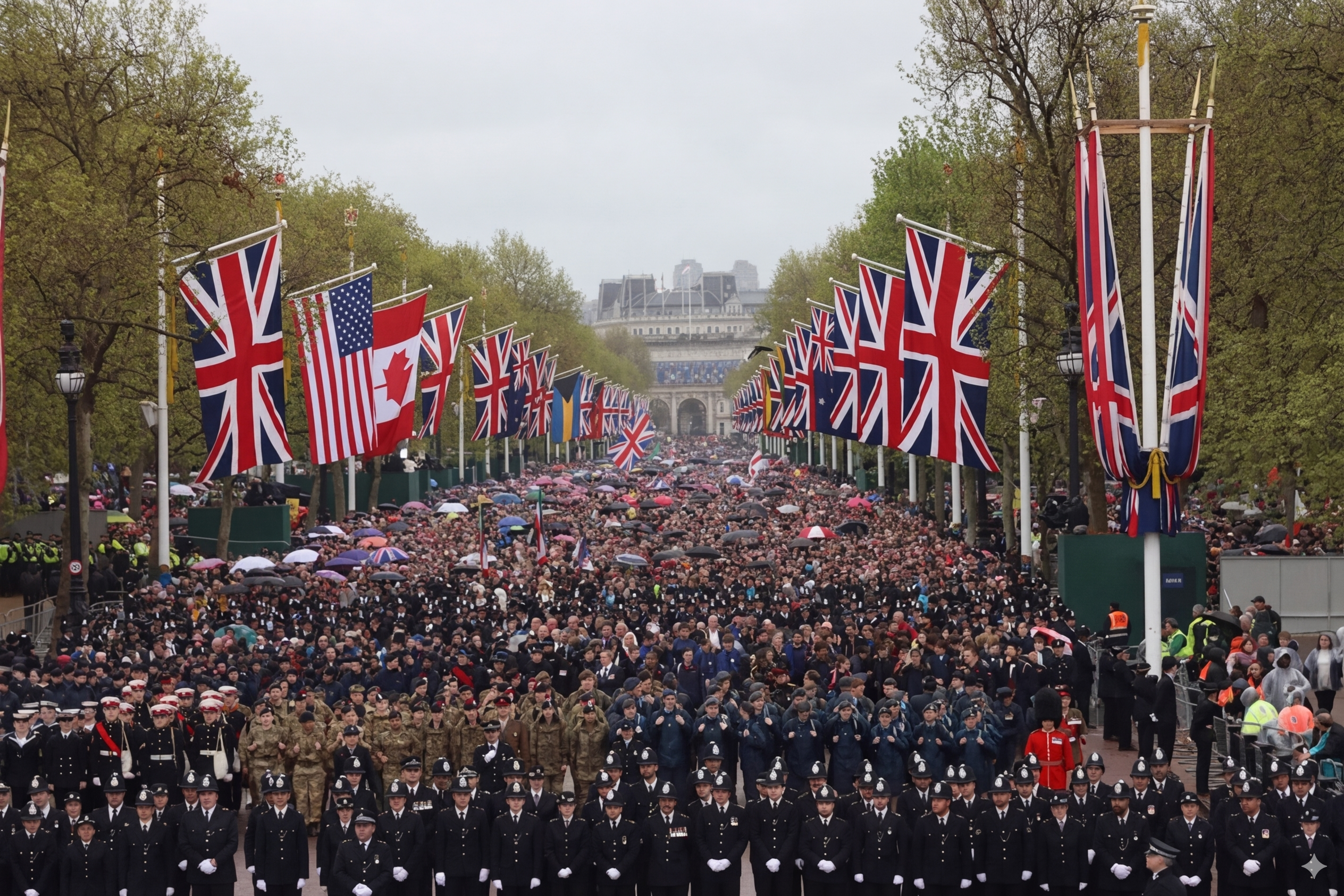
BBC Studios Events Productions — the unit that brought the world the Queen’s funeral, King Charles’s coronation, Remembrance Sunday at the Cenotaph, Trooping the Colour, and State Openings of Parliament — was being reduced to a single permanent member of staff. One person. Supplemented by freelancers when needed.
The woman left standing is Claire Popplewell, a broadcaster of extraordinary experience. She’s covered Nelson Mandela’s funeral. She coordinated royal weddings — William and Kate, Harry and Meghan. She’s earned awards. By all accounts, she’s exceptional. But even her defenders were appalled.
“It is literally the crown jewel of live British broadcasting,” one insider told The Times, their frustration barely contained. “They would never do this for Premier League football events, so what is it about national life that they don’t value? Surely this decision must be paused until it can be reassessed by the incoming director-general.”
That last line carries weight. Because what makes this story particularly explosive isn’t just what’s being cut — it’s when and how it’s being done.
The cuts, sources say, are being “sneaked through” during a deliberate window of leadership turmoil. Davie is gone. Brittin hasn’t started. There’s no captain on the bridge. And in that institutional no-man’s-land, someone decided to quietly dismantle the department that gave Britain its most watched shared moments of the last decade.
The comparison that keeps coming up — and that has incensed critics most — is Glastonbury. Every year, the BBC deploys a staggering 550 members of staff to cover the music festival in Somerset. Five hundred and fifty. The budget, the logistics, the crews — all of it marshalled for a weekend of pop music. And this is fine. Nobody is saying Glastonbury shouldn’t be covered. But when that number is placed next to “one staffer for the Queen’s funeral team,” something ruptures.
Former Attorney General Sir Michael Ellis KC didn’t mince words. “Somehow they can find unlimited resources to send an absurd retinue of 550 staff to the Glastonbury Festival — but they want to cut the excellent team who have won awards for their coverage of important ceremonial and key State events in the life of this nation.” He called it “another disgraceful anti-British decision from the BBC.”
Ellis went further. He noted that BBC coverage of events like Trooping the Colour and the State Opening of Parliament is watched and admired internationally — that it represents a kind of soft power, a projection of British dignity and history to global audiences. “Yet that,” he said, “is the department they have chosen to slash.”
Tory MP Esther McVey brought the argument to its most emotionally charged point. “It is outrageous that the BBC sees fit to send 550 members of staff to cover Glastonbury, particularly given the controversy around the Bob Vylan performance last year, while at the same time making cuts to the department responsible for bringing some of the most significant events in history to the public.” She called it “insulting to the memory of veterans.”
The Bob Vylan reference matters here. Last year’s Glastonbury broadcast drew significant controversy after the punk-rap duo performed material that many found offensive and politically inflammatory — yet the BBC’s commitment to festival coverage remained unshaken. Meanwhile, Remembrance Sunday — an occasion of national mourning, of gratitude, of remembrance for the fallen — is now to be handled by a skeleton crew.
Former Conservative leader Sir Iain Duncan Smith expressed something rarer than outrage: surprise. “The BBC’s coverage of royal events, funerals, weddings and other state occasions goes around the world,” he said. “It is the crown jewels of BBC output.” He, like others, seemed genuinely baffled that an organisation fighting for its relevance and public trust would choose to hollow out the very programming that commands the largest, most unified audiences it ever attracts.
Because here’s the uncomfortable truth the BBC’s spokesman — who insisted “viewers would not notice any difference in coverage quality” — didn’t address: the people who watch Remembrance Sunday and royal occasions are not niche. They are not a demographic to be managed. They are, in many cases, the licence fee payers most likely to feel that the BBC exists for them. And this decision tells them, in the plainest possible terms, that it doesn’t.
The pattern is becoming harder to ignore. This same month, the BBC quietly dropped live coverage of the Commonwealth Day Service from BBC One, replacing it with an episode of Escape to the Country. Management cited “funding challenges.” Days later, they confirmed they would not broadcast the Oxford-Cambridge Boat Race — ending a tradition that stretches back over a century.
These are not random cuts. Taken together, they describe a broadcaster quietly stepping back from its role as the custodian of national life. Not with a declaration or a debate — but through budget decisions made in corridors, during leadership gaps, while no one is watching too closely.
One source described the events team cuts as “desperately short-sighted.” That may be the most diplomatic thing said about this entire saga. What it actually looks like, to many observers, is an institution that has decided — consciously or not — that certain parts of British culture are worth less than others. That a coronation is less important than a headline act. That veterans deserve less than a festival crowd.
The BBC will insist this is about sustainability. About the financial pressures of the modern media landscape. About doing more with less. And some of that is real — the corporation is under genuine strain.
But there’s a difference between making hard choices and making choices that reveal what you truly value. And right now, the BBC has revealed something that a lot of Britons will find very hard to forgive.
Leave a Reply