
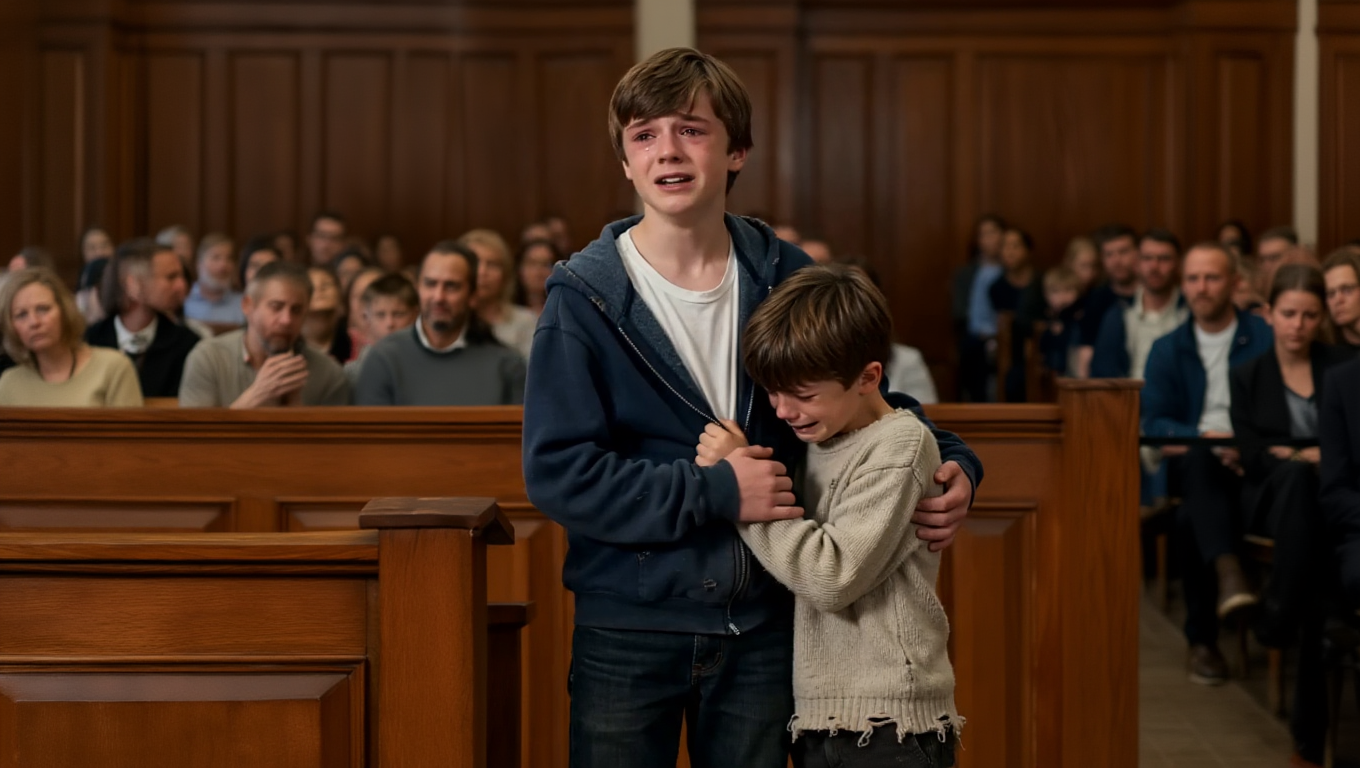
A 16-year-old boy stood before a judge with his 8-year-old brother clinging to his waist… and said the only five words the legal system couldn’t put in any file.
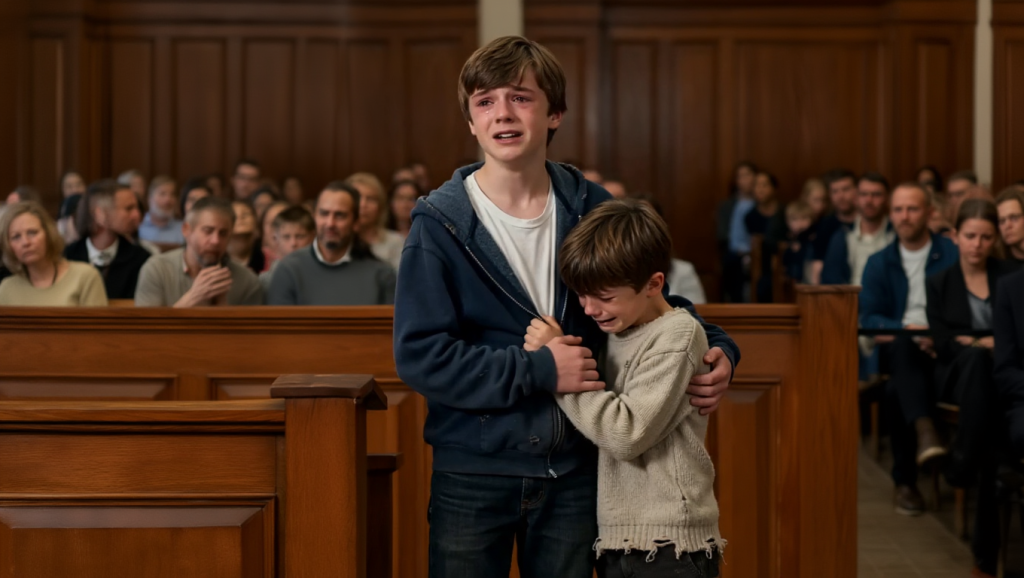
Their father died in February. Their mother in August. By September, Marcos — 16 years old — stood in a courtroom with his little brother Tomás, 8, clinging to his waist.
The file said there were no available relatives. It said the next step was the foster system. It said a lot of things. But the file didn’t say that Marcos had been cooking dinner every Tuesday and Thursday since their mother got sick — mac and cheese, because that’s what Tomás would eat. Grated cheese, not sliced. “It’s different,” Tomás always said. He was right.
The file didn’t say that after their mother died, Tomás stopped speaking for three weeks. Not completely — he’d say yes or no if you asked. But the continuous, eight-year-old chatter had gone silent. So every night, Marcos sat beside him and read from the dinosaur book. He read about the triceratops. The brachiosaurus. The ankylosaurus’s club tail. He didn’t try to fix anything. He just showed up.
One night, mid-chapter, Tomás said: “Are you going to go too?” Marcos closed the book. “No.” “How do you know?” Marcos thought about it seriously. “I’m not going to go. I know that’s not an answer. But it’s what I have.” Tomás considered it. “Okay,” he said — and started talking again.
In the courtroom, Marcos walked to the podium. Tomás walked with him. No one had planned for that. Tomás pressed his face into Marcos’s side and cried quietly, with his whole body. Marcos put a hand on his back and spoke anyway.
“Tomás eats when I cook. He started talking again when I read to him at night. I know I’m not old enough on paper. But there’s a foster family that will take us both. I have a job. I would contribute. All I’m asking is: don’t separate us. We are what we have.”
And then, in a voice that had been prepared and was also being discovered in real time: “I have no parents. But I can take care of him.”
The judge — a man who had held his expression steady through four thousand three hundred cases — blinked slowly. Tightened his jaw. Called a recess.
An hour later, he approved the joint placement.
Six months after that, at the review, the judge approved continuation. Marcos and Tomás walked out into a cold February morning, hand in hand — not because Tomás needed to be held, but because he wanted to be. Which was different. And Marcos had learned to tell the difference.
Leave a Reply