

A scarred man lived alone on the mountain. Everyone left within a week… until the woman the whole town called “too much” decided she’d be the last to go.
In the mountain town of Alder Creek, the stories about Caleb Turner had been circulating so long that no one could quite remember which ones were true anymore.
Some said he was a veteran, broken by war. Others said an accident had left him half-mad along with half his face. Most people just agreed on the simplest version: he was someone you didn’t want to be around.
The scar ran from his temple to his jaw like a pale seam in old leather, and one of his eyes had gone cloudy and pale, never quite settling on anything. His beard grew untended, he spoke in fragments, and he lived alone in a rough-hewn cabin halfway up Copper Ridge — far enough above the town that no one had to see him unless they chose to.
People occasionally had reason to go up there. To fix a fence, patch the well, deliver supplies. They always left quickly. Not one person had stayed longer than a week.
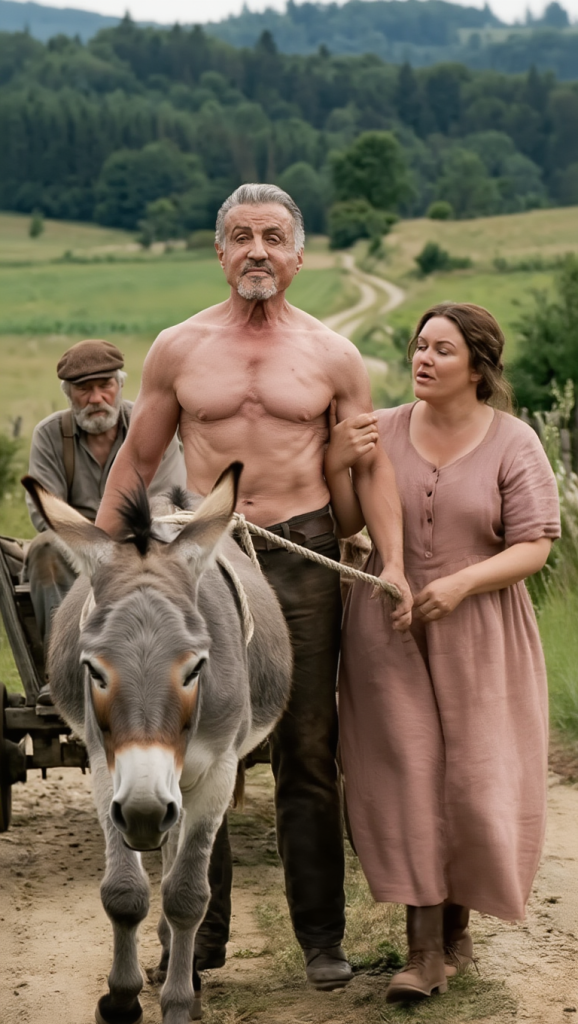
That changed the morning Martha Bell pulled her worn-out pickup into Alder Creek.
Martha had been called many things in her thirty-three years. Too loud. Too big. Too opinionated. Too emotional. The words had come from teachers, from neighbors, from the man she’d almost married, who told her quietly one evening that she was simply too much for a peaceful life.
She’d grown up in a flat Oklahoma town where women were expected to take up as little space as possible — in rooms, in conversations, in the world. Martha had never quite managed that. She laughed at full volume. She spoke her mind in full sentences. She had the kind of strong, broad-shouldered build that was made for work, not for looking delicate.
After the engagement ended, she packed everything into the pickup and drove west without a destination. Three weeks and eleven hundred miles later, she arrived in Alder Creek and felt the cold mountain air sting her lungs like a good warning.
The mountains were beautiful. The town felt familiar in all the wrong ways.
People smiled at her face and whispered at her back. She heard the words she always heard: she eats like a lumberjack, she talks like she owns the place, Lord, she’s a lot to take in.
Too much. Always too much.
She was standing outside the general store, trying to decide whether to move on, when she saw the handwritten notice tacked beside the door.
Caretaker Needed – Cabin on Copper Ridge. Room and board included. Must not scare easy. — C. Turner.
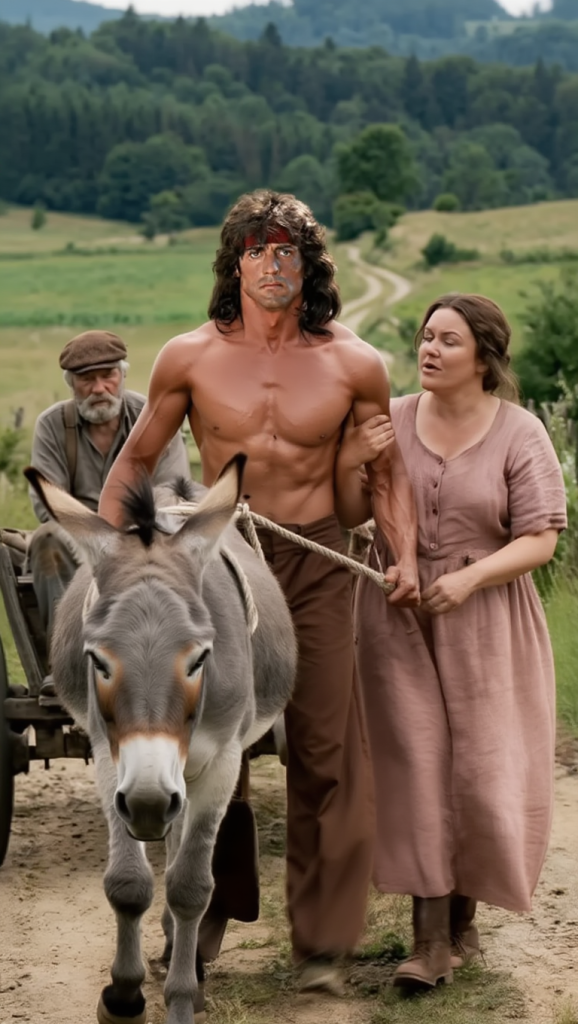
She read it twice. Then she went inside.
The store owner froze when she asked about it.
“You don’t want that job,” he said immediately.
“Why not?”
He leaned across the counter. “That’s the scarred man up the ridge. Nobody stays longer than a week.”
Martha considered that for a moment.
“Then maybe,” she said, “he just hasn’t met the right person.”
The cabin was farther up than she expected, tucked behind a screen of tall firs on a rocky slope, the valley spread out far below. Martha knocked once. The door opened halfway.
Caleb Turner looked exactly like the stories. The scar cut across his face in a wide pale arc, and his cloudy eye gave him an expression that seemed to be looking slightly past everything. He studied her for a few seconds without speaking.
“You lost?” he asked.
“Nope. Here about the caretaker job.”
Silence.
“No,” he said.
“No?”
“No job. Changed my mind.”
Martha folded her arms. “You put up a notice three days ago.”
“Took it down this morning.”
“I drove three hours,” she said pleasantly, and stepped past him into the cabin.
Caleb stood at the door for a long moment, staring at the space where she’d been standing.
No one had ever done that.
The first few days were tense in the particular way of two people who are not yet used to each other’s gravity. Martha cleaned the kitchen without being asked. Caleb moved around her in silence, watching from a distance. She repaired the fence along the north side of the property. He grunted once, which she chose to interpret as approval. She cooked enough food for three people.
“You planning to feed the forest?” he asked, eyeing the plates.
“Big people need big meals,” she replied, loading his plate with mashed potatoes.
He hesitated. Then he ate.
It was the first time in years he’d finished a meal with another person sitting across from him.
Word got back to Alder Creek almost immediately, the way news does in small towns where everyone is paying careful attention to everyone else.
“The big woman took the job.”
“How long do you give her?”
“Three days.”
“A week, if she’s stubborn.”
They waited. A week passed. Then two. Then a month.
Martha fixed the leaking roof. She planted a small vegetable patch beside the south wall. She filled the cabin with the smell of fresh bread and the sound of her voice, which was not small. Every evening she sat on the porch beside Caleb and watched the sun go down behind the ridge. Sometimes they talked. Often they didn’t. But neither of them seemed in a hurry for the silence to end.
One night a thunderstorm rolled in hard and knocked out the generator. Martha lit a lantern and found Caleb sitting very still at the kitchen table.
“Scared of thunder?” she teased.
“Fire,” he said.
She waited.
What came out over the next half hour was not dramatic — he spoke quietly, choosing words carefully, as though testing each one for weight. He had been a forest firefighter. During a major wildfire, a burning tree came down and trapped him and two younger crew members. He managed to drag both of them clear before the flames closed in. He didn’t get out in time himself.
The burns nearly killed him. The recovery took most of a year.
When he came home, people didn’t see what he had done. They saw what he looked like now. The stares, the children who cried, the neighbors who found reasons to be elsewhere. Eventually he went up the mountain so no one would have to look at him anymore.
When he finished, only the rain was talking.
Martha studied his face for a long moment.
“That must have hurt,” she said quietly.
Caleb looked at her. In all the years since the fire, through all the awkward condolences and averted eyes and well-meaning pity, no one had ever responded like that. Not with fear or sorrow or discomfort, just — plain, direct acknowledgment.
That must have hurt.
He didn’t have anything to say back. But something in the room had shifted.
Autumn transformed the mountains into something almost unreal — the firs dark against slopes of gold and copper. Martha thrived in the cold. She hauled firewood as if it weighed nothing. She talked to the chickens like old friends. She sang while she cooked, badly and at full volume, and Caleb found himself — very quietly, when she wasn’t looking — smiling at it.
One afternoon she drove down to town for supplies. In the diner, two women at a nearby table didn’t bother to lower their voices.
“He must be desperate.”
“She’s the only one who’d stay with a face like that.”
Martha set her basket on the counter with a soft thud.
“He carried two men out of a burning forest,” she said, not loudly — she didn’t need to. The diner had already gone quiet. “Saved their lives. Couldn’t save his own face doing it.” She picked up her basket. “I’ve seen far uglier things than scars.”
She walked out into the cold.
Winter that year came early and mean. A three-day storm buried the roads and cut the power, and on the third night a massive pine cracked under the weight of ice and came down across the cabin roof. Martha barely cleared the doorway before a section of ceiling gave way. Snow poured in through the gap.
Caleb tried to shoulder the tree clear and went down hard on the ice, his old leg injury giving out completely.
“Martha!” The word came out stripped of everything except urgency.
She was already outside. The wind was a wall of sound. The tree was enormous, three feet through at the base, still half-alive with branches like a barricade.
“Get inside,” she told him.
“The roof—”
“I’ll handle it.”
She spent two hours in the dark and the roaring cold with a chainsaw and ropes and every piece of structural knowledge she’d absorbed over thirty-three years of doing things herself. She cut away the canopy, rigged support beams from nearby logs, and by midnight the cabin was stable enough to hold through the rest of the storm.
When she finally came inside, covered in sawdust and ice and her own breath, Caleb was standing in the doorway to the main room, looking at her in a way that had no name for it.
“You could have left,” he said.
Martha poured herself a coffee. Held the mug in both hands.
“I’ve spent most of my life leaving places,” she said. “Someone has to stay long enough to be the last one to go.”
She smiled at him over the rim of the mug.
Spring arrived slowly, as it does at elevation. Wildflowers came up along the southern slope in colors that seemed almost too bright after the long white months. Martha and Caleb sat on the porch in the weak afternoon sun, watching the valley wake up below them.
“Most people spent years trying to fix me,” Caleb said at last.
Martha raised an eyebrow. “And?”
“You didn’t.”
“Why would I?” she said. “You’re not broken. You’re just lonely.”
He leaned back in the old chair and looked out at the mountains — the same mountains he’d been hiding in for years, waiting for people to stop seeing him.
They felt different now.
Not like a place to disappear.
Like home.
Leave a Reply