
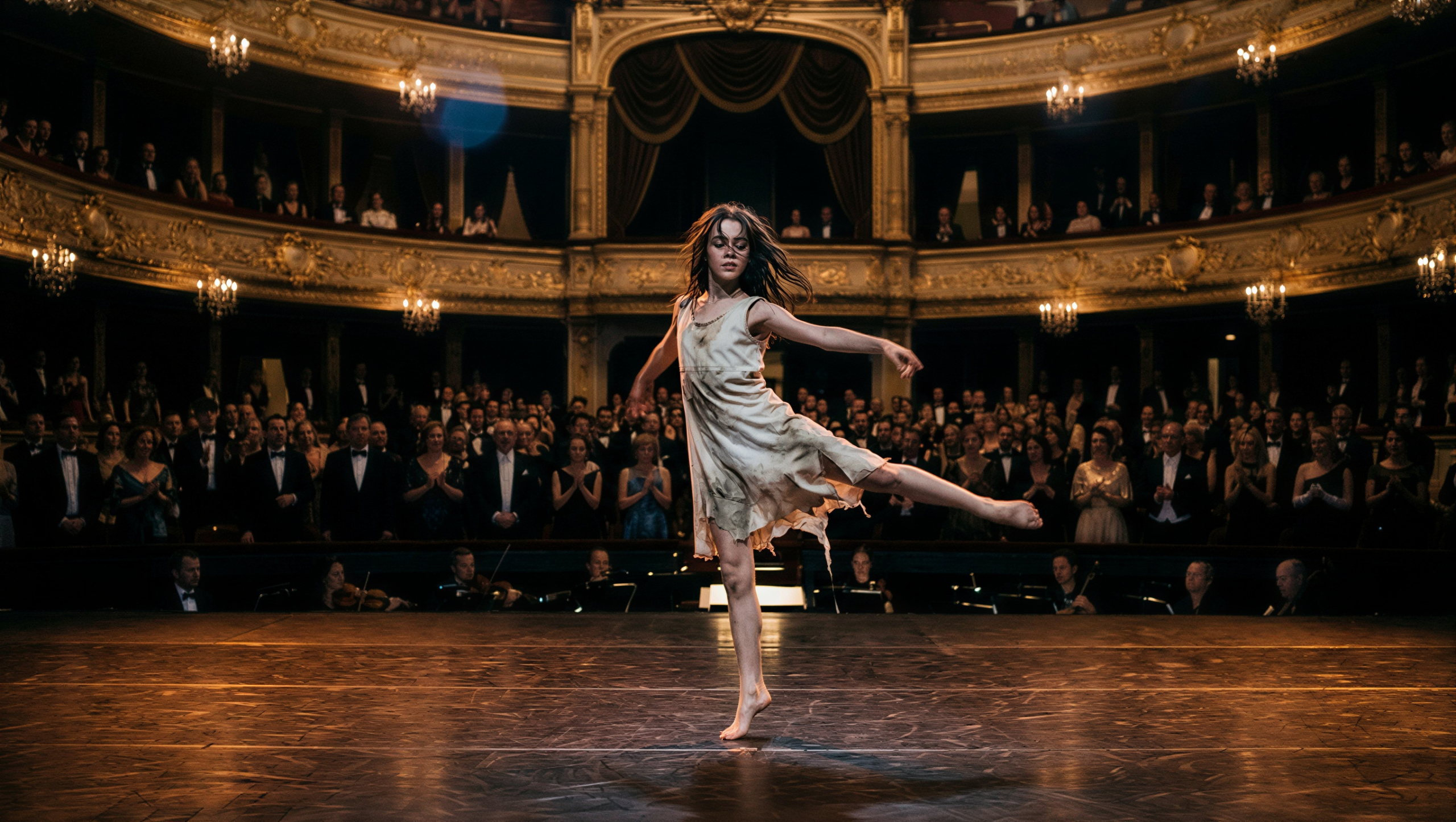
A barefoot girl in a torn dress walked onto the most elite ballet stage in the city… and performed a lost masterpiece that had vanished 15 years ago.
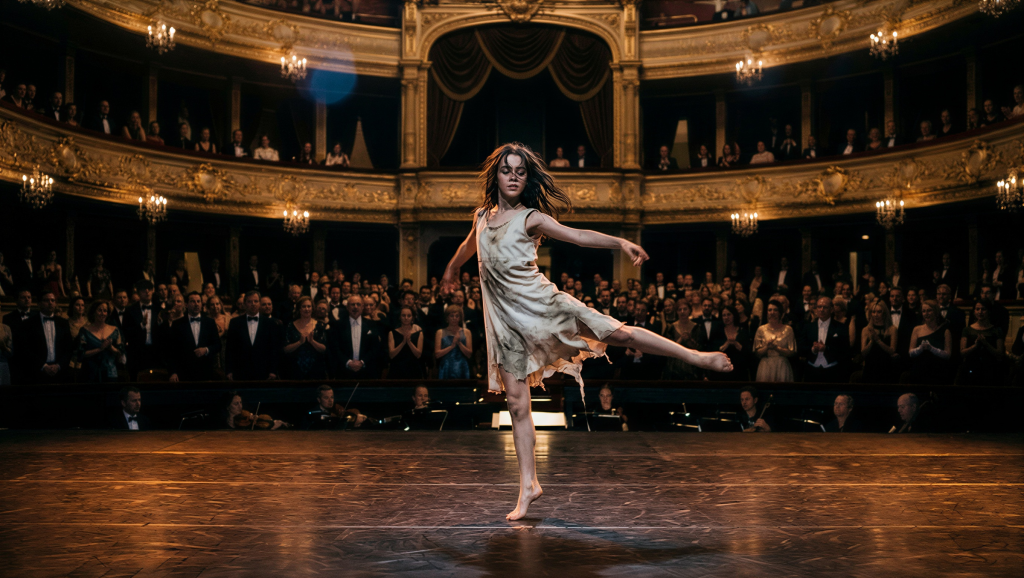
The Grand Opera House gleamed with cold opulence that night. A thousand elite guests fell silent as I — Maestro Anton, Principal Director — raised my baton.
Then a small shadow tore through the velvet curtain.
Barefoot. A faded, oversized cotton dress. Tangled hair blazing under the crystal spotlights.
“Get her off the stage!” the director barked into his radio.
She didn’t move. Didn’t flinch. She stood perfectly still beneath the brightest light in the room — and then, slowly, raised her thin arms.
I lowered my baton. The eighty-piece orchestra went silent.
No one understood why. But my eyes were locked on the precise placement of her feet. The exact angle of her chin.
She began to dance.
One gliding step. Then a flawless pirouette.
Every murmur in the hall evaporated.
Because those movements weren’t a child playing pretend. They were ballet — pure, devastating, and achingly beautiful.
From the edge of the stage, Isabella, the night’s untouchable star, had gone white as paper.
“That’s… impossible,” she whispered.
She was right. The sequence the child was performing was El Lamento del Cisne — the legendary lost finale that had disappeared fifteen years ago, the night my most gifted student Clara lost the use of her legs in a crash no one could explain.
The girl completed one last turn and slowly knelt on the wooden stage floor.
Then, into a hidden microphone, she whispered:
“My mother wrote this dance.”
Silence swallowed the entire theatre.
“LIAR!” Isabella shattered it, storming onto the stage. “Security — remove this child!”
I stepped in front of the girl.
“Her name is Lily,” I said into the speakers. “And I’d like her to finish.”
Lily reached into her ragged dress pocket and produced a worn leather notebook — its yellowed pages dense with hand-drawn choreography and musical notation. Clara’s handwriting. The notebook I had believed burned in the accident.
The Grand Duke rose slowly from his private box above.
“The police are waiting for you at the rear exit, Madam Isabella.” His voice was ice. “The mechanic’s confession arrived this evening. Along with that notebook — that’s sufficient.”
Isabella collapsed onto the stage floor.
While officers escorted her away, I returned to my podium and raised my baton one final time.
“Piece four,” I announced, voice unsteady with emotion. “For Lily.”
She danced.
In the back row, in the shadows, a woman in a wheelchair wept quietly. Clara — her face marked by years of hardship, her eyes still burning with an artist’s pride.
When the last note faded, Lily bowed.
The audience rose as one. The applause was thunder.
Leave a Reply