
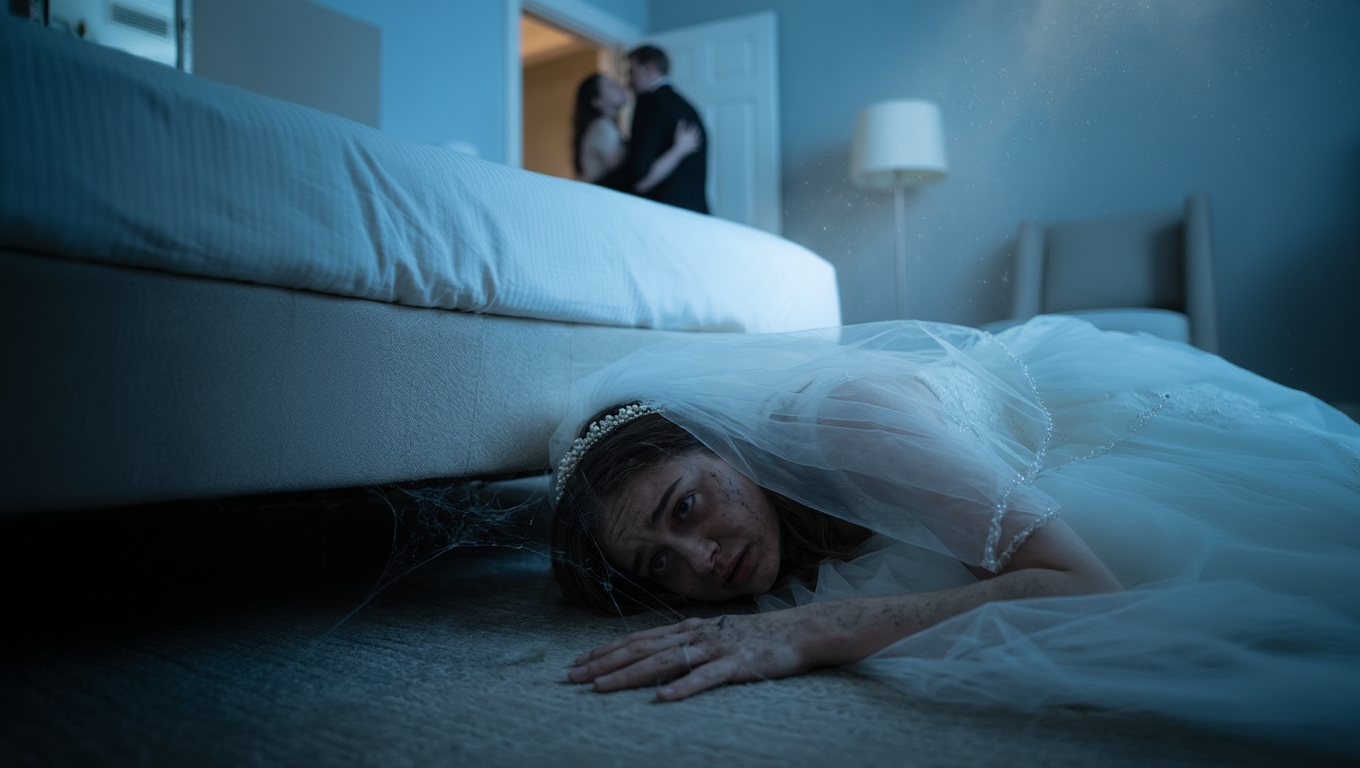
On my wedding night, I hid under the bed to surprise my husband — and found my best friend already there, whispering his name like she owned him.
My brother’s voice on the phone made it worse.
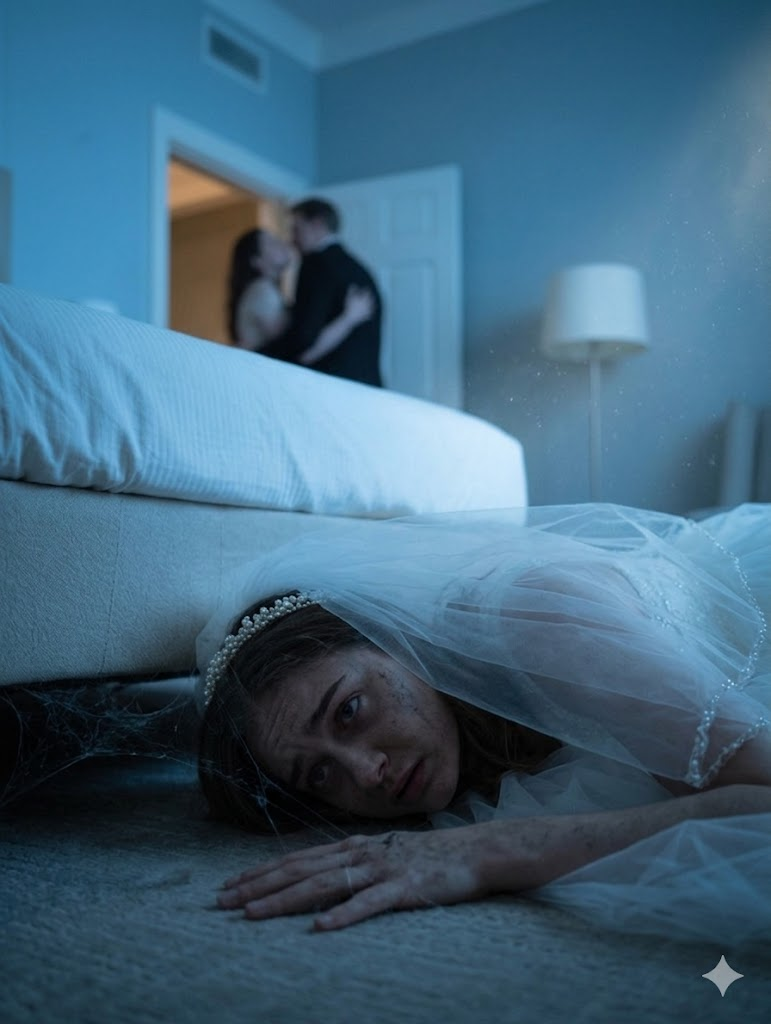
I wasn’t supposed to be under the bed. It started as a joke — a silly, romantic impulse. Andrés had gone downstairs for champagne and I thought: what if I hid, jumped out, made him laugh on our wedding night? Ten seconds of playfulness before the rest of our lives began.
I never made it out from under that bed.
Because before Andrés returned, the door opened. And someone slipped in who had no business being there. Carolina. My best friend of ten years. She moved through the dark like she knew every corner of that room — because she did. Because she had been here before.
She sat on the edge of the bed, inches above my face, and waited.
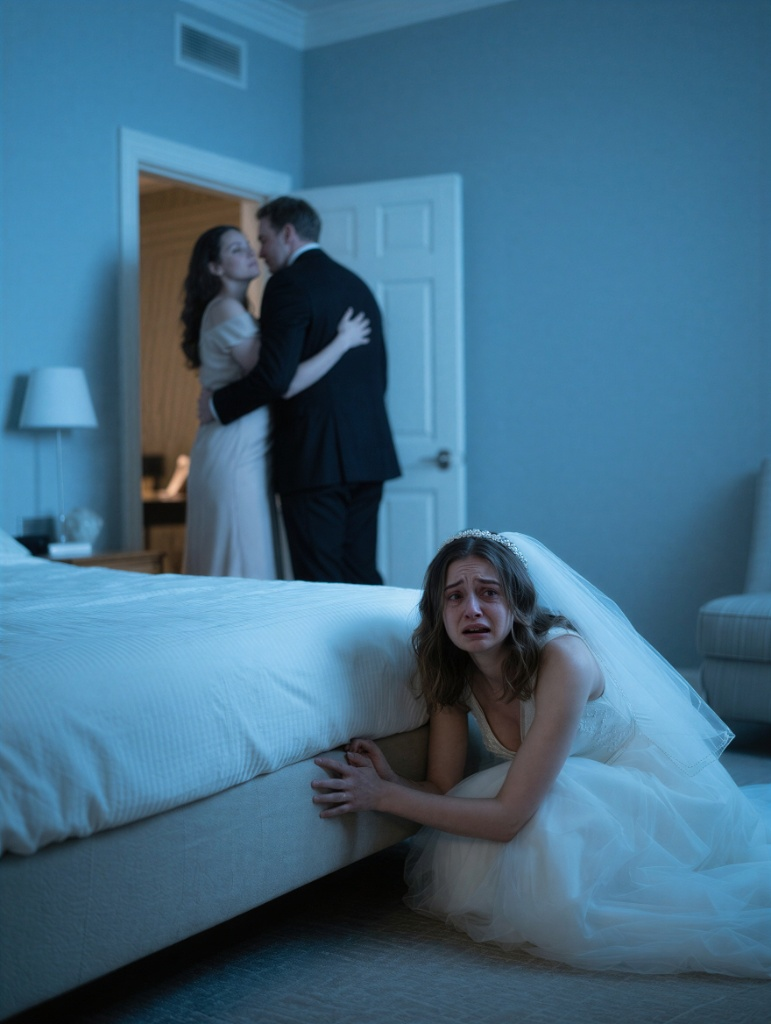
When Andrés walked in, there was no surprise. No “What are you doing here?” No alarm. He set the champagne down and kissed her — slow, comfortable, the kiss of two people who had been kissing for years. My stomach turned to stone.
“Did you find it?” he asked.
“Not yet. Miguel’s calling in a minute.”
Miguel. My brother. The name landed like a fist.
The phone rang. She answered on speaker. His voice — the voice that read me bedtime stories, that held me at our parents’ funeral, that told me Andrés was “a good man” — filled the room.
“The loan document. Blue folder, either the closet or the suitcase. Get it tonight. Tomorrow, 8 a.m., Andrés goes to the bank. By noon the money hits the Cayman account. One hundred and eighty thousand, gone.”
One hundred and eighty thousand dollars. Every cent my parents had left me. The money I had handed Andrés two months ago for “his business expansion,” because Carolina said it was a good idea, because Miguel said the paperwork was solid, because I was a woman who trusted the people she loved.
I pressed both hands against my mouth.
I had been the project. A year of careful work: Miguel feeding them my financial details, Carolina engineering the introduction at a café, Andrés performing the role of perfect man — attentive to every insecurity, every loneliness, every crack in me left by grief. The rushed wedding made sense now. Fewer witnesses. Less time to think. The loan, signed just last week, was the closing act. The house I’d inherited was collateral. After the transfer, a staged divorce. By then I’d be too broken to fight.
They had done this before. Four other women, other cities. One lost her business. One tried to end her life.
Under that bed, in my wedding dress, something inside me went very quiet. Not numb — sharp. The fear dissolved and something colder took its place.
I opened my phone. Turned on the voice recorder. Pressed the red dot.
I recorded for fifteen minutes. Every word. Every laugh. Every instruction.
When they finally left, I lay still for a long time. Then I crawled out, stood in front of the mirror, and looked at the woman staring back — mascara-streaked, hair ruined, still in the dress. She looked wrecked. She didn’t feel it. She felt awake for the first time in a year.
At 6 a.m. I called a fraud attorney. By 7:30 I was at the police station. The detective listened to the recording once, jaw tight, and said: “Where will he be?”
“National Bank. Eight o’clock sharp.”
Andrés arrived at 8:05, elegant, confident. He went straight to the international transfer window. The teller — briefed in advance — smiled and asked for his ID. The bank doors opened behind him. Four officers. He turned, saw them, and ran exactly three steps before they took him down.
Carolina was arrested at her apartment, mid-packing.
Miguel was taken from his office, in front of every client and colleague he’d spent a career impressing.
Andrés got eight years. Carolina, seven. Miguel, ten — plus permanent loss of his accounting license. The marriage was annulled; it had never been real in any sense that mattered. The fraudulent loan was voided. My house came back to me.
When I visited Miguel before sentencing, he asked why I hadn’t just come to him privately. “We could have worked something out. I’m your brother.”
I looked at him for a long time. “That’s exactly why,” I said.
I walked out and didn’t look back.
The first months after were hard in a different way. I questioned every friendship, replayed every conversation. Therapy helped. I learned that betrayal at this scale is not a reflection of the victim’s intelligence — it’s a reflection of the predator’s patience. Con artists don’t find broken people; they build the break, slowly, over time.
I went back to school. Forensic psychology. Now I work with fraud survivors, and I tell them what I wish someone had told me: your instincts were right. You felt it before you could name it. Next time, listen sooner.
Six months ago I met someone who has never once made me feel like a puzzle to be solved. I don’t know what the future holds. But I know who I am now — and I know I’ll never again mistake a performance for a person.
The woman who hid under that bed in terror died there. The one who crawled out had a recording, a plan, and nothing left to lose.
I’ll take her over the old me, every single time.
Leave a Reply